
Back-to-school season has a way of exposing the habits we carried quietly through the summer. Students return to desks, backpacks, screens, and study sessions. Parents shift into carpools, lunch packing, work schedules, and after-school logistics. Professionals in transition, whether starting a new role, returning to the office, changing routines, or rebuilding after a demanding season, often find themselves sitting more than they expected.
And our spines feel it.
At Thrive Proactive Health, we often talk about “sitting spines” because sitting isn’t just a position, it’s a repeated pattern. Over time, the way we sit, breathe, carry bags, use screens, sleep, stand, and move can shape how our muscles learn to hold us. Sometimes the issue isn’t one dramatic injury. Sometimes it’s the backpack always worn on the same shoulder, the laptop bag always carried on one side, the car seat posture during long commutes, or the desk setup that encourages the ribs, pelvis, neck, and shoulders to live in the same rotated pattern every day.
That’s where breathing therapy and Postural Restoration® can become powerful parts of a proactive plan.
Your Spine Is Not Working Alone
When people think about posture, they often imagine “standing up straight” or pulling the shoulders back. That may look better for a moment, but posture is much more than a shape. It’s a relationship between your breath, ribs, pelvis, diaphragm, nervous system, muscles, vision, feet, and daily habits.
The Postural Restoration Institute describes posture through the lens of airflow, asymmetrical patterns, and the body’s ability to breathe, rotate, and rest more symmetrically. PRI also teaches clinicians to consider how rib position, diaphragm mechanics, accessory breathing muscles, oblique strength, and habitual patterns influence the thorax and movement.
In simple terms, your spine isn’t just being held up by “core strength.” It’s being influenced by how well your body can alternate, shift, rotate, exhale, inhale, and find support from both sides.
Why Asymmetry Matters
The human body is naturally asymmetrical. The heart is more to the left. And the liver is more to the right. Most people have a dominant hand, a preferred leg, a favorite side to sleep on, and a more comfortable way to cross their legs.
Asymmetry is not automatically bad. It’s part of being human.
The concern begins when asymmetry becomes a fixed strategy. A student who always carries a heavy backpack on the right shoulder may start hiking that shoulder, rotating the trunk, or changing their walking pattern. A parent who always carries a toddler on the same hip may feel one side of the back tighten. And a professional who sits at a laptop all day may begin breathing more into the upper chest than the lower ribs. Over time, certain muscles may become overworked, while others become under-recruited.
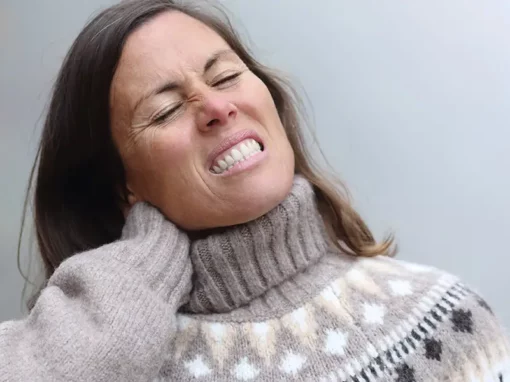
That imbalance can show up as neck tension, low back discomfort, hip tightness, shoulder irritation, jaw clenching, headaches, shallow breathing, or a sense that stretching helps briefly, then the same tightness returns.
Breathing Is a Postural Tool
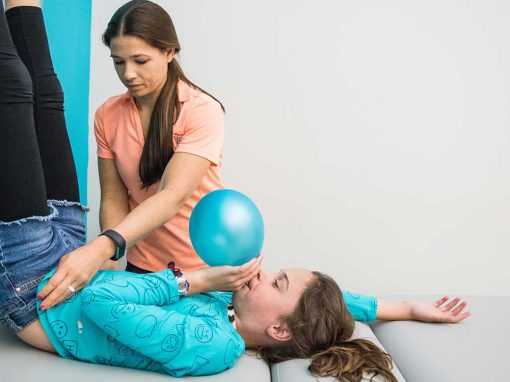
Breathing therapy isn’t just about taking deeper breaths. It’s about helping the body access a better position from which to breathe.
When the ribs are flared, compressed, rotated, or stuck in a pattern, the diaphragm may not move as efficiently. When the diaphragm isn’t moving well, the neck, shoulders, back extensors, and chest muscles may try to help with breathing. These accessory muscles aren’t bad, but they aren’t meant to carry the full workload all day.
A breathing therapy approach can help people learn how to exhale fully, soften overactive areas, expand restricted rib spaces, and reconnect with grounded support. This may help the body move away from constant bracing and toward more balanced movement.
For sitting spines, this matters. A spine that is held in tension all day needs more than a reminder to “sit up.” It needs a way to reset.
How Postural Restoration® Fits In
Postural Restoration® looks at patterned movement and position. Rather than chasing symptoms only where they appear, a PRI-informed approach asks questions such as:
- Why does one side always feel tighter?
- Why does the body shift into the same seated posture?
- My neck is working so hard during breathing… Why?
- Why does the low back feel pressure after sitting?
- Why does stretching help temporarily, but not last?
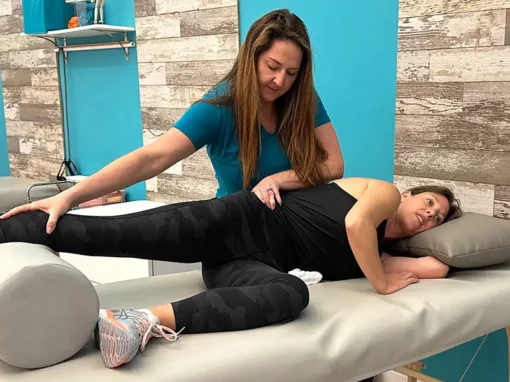
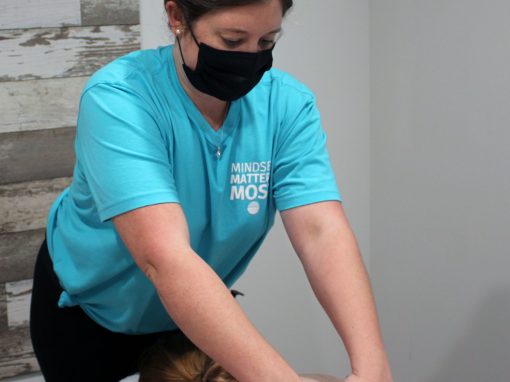
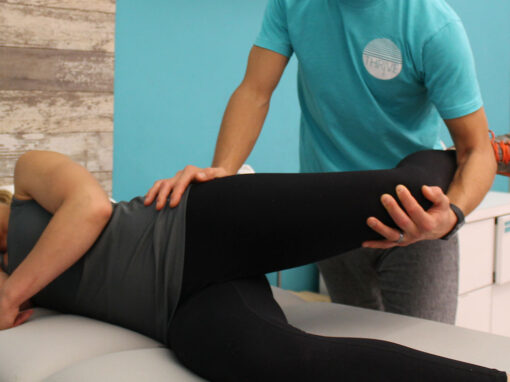
Through a screening, we can observe how your body organizes itself. We may look at breathing patterns, rib position, pelvic position, hip movement, shoulder motion, gait, and how your body manages left-right balance.
The goal is not to force perfect symmetry. The goal is to help your body regain options.
More options may mean the ability to sit without collapsing into the same side, breathe without neck tension, stand without locking the knees, carry a bag without overloading one shoulder, and transition through daily life with more ease.
Back-to-School Bodies Need a Reset
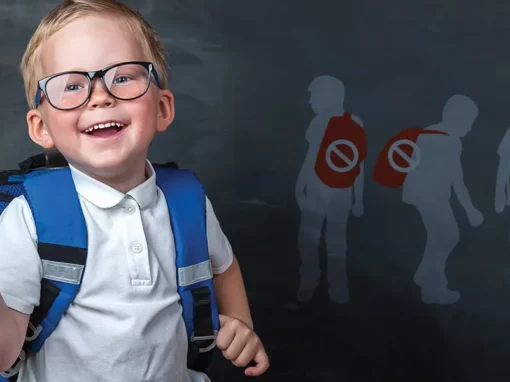
Students are a perfect example of why this matters. A school day can involve long sitting, screen use, stress, sports, instruments, studying, and backpacks. The American Academy of Pediatrics notes that backpacks that are heavy or worn improperly may contribute to back, neck, and shoulder pain in children and teens, while also clarifying that backpacks have not been shown to cause scoliosis.
A helpful back-to-school reset may include:
- Choosing a backpack with two padded straps and actually wearing both straps.
- Keeping heavier items close to the body.
- Cleaning out unnecessary books, supplies, and old papers weekly.
- Switching sides when carrying a sports bag or instrument case.
- Taking short movement breaks during homework.
- Practicing a few calm, full exhales before studying, tests, or sleep.
Students do not need to become posture-perfect. They need routines that make healthy alignment easier to return to.
Parents Are Carrying More Than the Schedule
Parents are often the hidden athletes of the school year. They lift backpacks, groceries, laundry baskets, car seats, sports equipment, and tired children. They sit in cars, hunch over forms, work at computers, prep meals, and manage the emotional load of transition.
A parent’s body often adapts quietly. One hip becomes the carrying hip. One shoulder becomes the bag shoulder. One side of the neck becomes the stress side. Breathing becomes shallow because the day feels rushed from the moment it begins.
This is where a breathing reset can be both physical and grounding. Before the first school pickup, before opening the laptop, or before collapsing into bed, a few intentional breaths can help cue the ribs, diaphragm, pelvis, and nervous system to shift out of constant urgency.
Try this simple routine:
- Sit with both feet on the floor.
- Let your shoulders soften.
- Inhale quietly through the nose.
- Exhale slowly as though fogging a mirror, without forcing.
- Pause for two seconds after the exhale.
- Repeat for five breaths.
Notice whether your ribs soften downward, your neck releases slightly, or your feet feel more connected to the floor. That isn’t “just breathing.” That’s your body receiving new information.
Professionals in Transition Need Support, Too
Transitions are not limited to students. Adults change jobs, return to offices, start hybrid work, move through career shifts, build businesses, recover from burnout, and adjust to new family rhythms. These seasons often disrupt the routines that previously kept the body moving.
A new commute can change hip and spine mechanics. A new desk can change neck position. There’s a new level of stress that can change breathing. And a new role can increase sitting time and reduce recovery time.
The National Institution for Occupational Safety and Health (NIOSH) describes ergonomics as designing work tasks to suit workers’ capabilities and notes that ergonomics can help reduce work-related musculoskeletal disorders and injuries. That matters, but ergonomics is only one part of the story. A better chair can help, but your body also needs the ability to sense, shift, breathe, and alternate throughout the day.
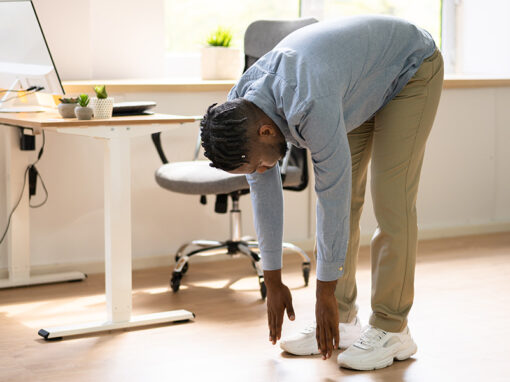
For professionals, consider a “transition checkpoint” every 60 to 90 minutes:
- Uncross your legs.
- Place both feet on the floor.
- Exhale fully three times.
- Turn your head gently to the left and right.
- Reach one arm forward, then the other.
- Stand, walk, and let your arms swing.
Small resets, repeated consistently, can help prevent the workday from becoming one long held posture.
A Simple Daily Reset for Sitting Spines
Here’s a gentle routine to begin reconnecting breath and posture during a busy transition season:
-
Morning: Find Your Feet
Before the day accelerates, stand with both feet grounded. Take three slow exhales. Feel your heels, arches, and toes. Let your body know the day starts with support.
-
Midday: Change Your Shape
Don’t wait for pain to move. Stand up, walk, reach, rotate, and breathe. Your best posture is often your next posture.
-
Afternoon: Unload Evenly
Students can clean out backpacks. Parents can switch bag sides. Professionals can lighten purses, laptop bags, and briefcases. Balanced loading matters.
-
Evening: Exhale to Downshift
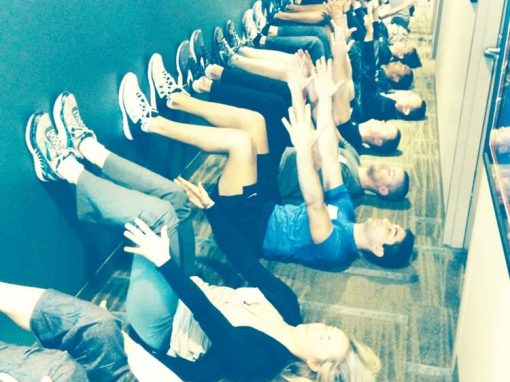
Lie on your back with knees bent or sit supported in a chair. Take five slow breaths with longer exhales. Let the ribs soften. Let the jaw unclench. Let the day end differently than it began.
When to Get Screened
Consider a breathing therapy and Postural Restoration® screening if you or your child notices recurring tightness, one-sided discomfort, shallow breathing, neck or shoulder tension, low back pressure after sitting, uneven hips, difficulty relaxing, or posture that seems to keep returning to the same pattern no matter how often you stretch.
A screening can help identify whether your body is stuck in a pattern that breathing therapy and Postural Restoration® may help address. It’s a proactive first step, not a commitment to a complicated plan.
Schedule Your Free Screening
Transitions are part of life. Discomfort doesn’t have to be.
Whether your student is heading back to school, your family routine is shifting, or your work life is changing, your spine deserves support that goes deeper than “sit up straight.”
Schedule your free Breathing Therapy & Postural Restoration® screening with Thrive, and let us help you reset your routines, support your sitting spine, and continue thriving through every season of life.