

Back pain is frustrating enough on its own, but when it travels into the hip, buttock, leg, or foot, it can feel especially discouraging. That radiating, stubborn discomfort is often called sciatica. It may feel sharp, burning, electric, achy, numb, or tingly, and it often affects one side of the body. Sciatica happens when the sciatic nerve is irritated or compressed, and symptoms can travel from the low back through the buttock and down the leg.
The good news is that physical therapy can be very helpful for many people with sciatica-like back pain. A thoughtful physical therapy plan can improve mobility, calm irritated tissues, strengthen the muscles that support the spine, and help you move with more confidence. Physical therapy for sciatica often includes flexibility work, pain-control techniques, and strengthening exercises for the muscles that support the back.
At Thrive, physical therapy is about more than handing you a sheet of exercises. It’s about understanding how your body moves, why your pain keeps returning, and what your spine, hips, core, and nervous system need to function better in daily life.
First, a Safety Note
Not every back or leg pain responds to the same exercise. Some people feel better with extension-based movements, such as gentle press-ups. Others feel better with flexion-based movements, such as knees-to-chest. A physical therapist can help identify which direction and dose are best for your body.
Seek prompt medical care if you have sudden leg weakness or numbness, pain after a serious injury, trouble controlling your bowels or bladder, severe worsening symptoms, or pain that does not improve with self-care. Mayo Clinic lists these as reasons to contact a health care professional or seek immediate care.
For the exercises below, stay in a gentle range. Mild stretching or muscle effort is okay. Sharp pain, worsening leg symptoms, increased numbness, or symptoms that travel farther down the leg are signs to stop and get guidance.
Why Movement Helps Sciatica and Back Pain
When back pain flares, it’s natural to want to rest. A short period of rest may help at first, but staying inactive can make sciatica symptoms worse. In fact, Mayo Clinic notes that most people with sciatica respond to self-care, but prolonged inactivity can worsen symptoms.
Movement helps because it improves circulation, reduces stiffness, maintains strength, and teaches the nervous system that normal motion is safe again. Getting movement and strength back after a back problem supports tissue healing and helps people move again.
The goal is not to force your way through pain. The goal is to find the right movement, at the right intensity, at the right time.
Physical Therapy Exercises That Improve Mobility and Support Recovery
-
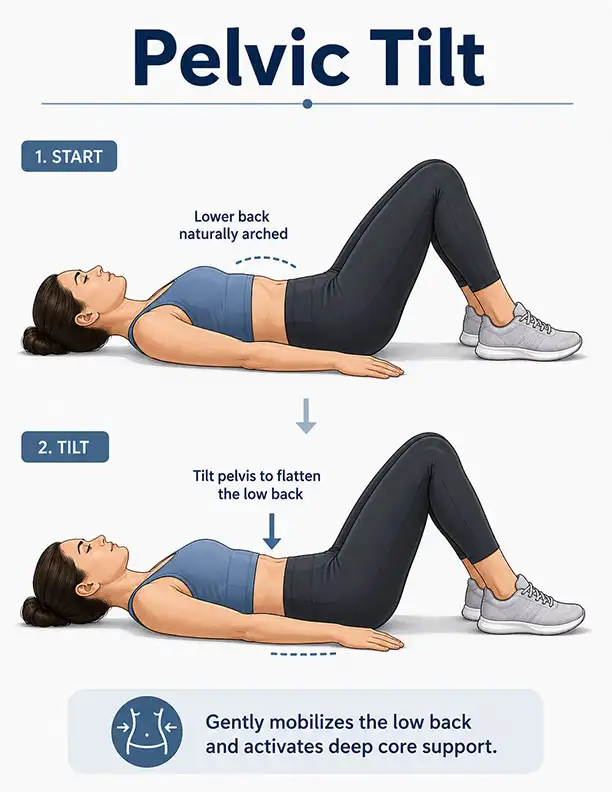
Pelvic Tilt
How to do it: Lie on your back with your knees bent and feet flat on the floor or bed. Place your hands on your hip bones. Gently tighten your lower belly as you flatten your low back toward the surface beneath you. Hold for two seconds. Then slowly tilt your pelvis the other way, allowing a small space to return under your low back. Repeat 8 to 12 times.
What it does for you: Pelvic tilts gently wake up the deep abdominal and pelvic muscles that help support the low back. They also improve awareness of how your pelvis and lower spine move together.
Why it may help: When back pain is stubborn, the body often guards and stiffens. Pelvic tilts create safe, controlled motion without aggressive stretching. Pelvic tilts are among the exercises that may help people regain back movement gradually.
-
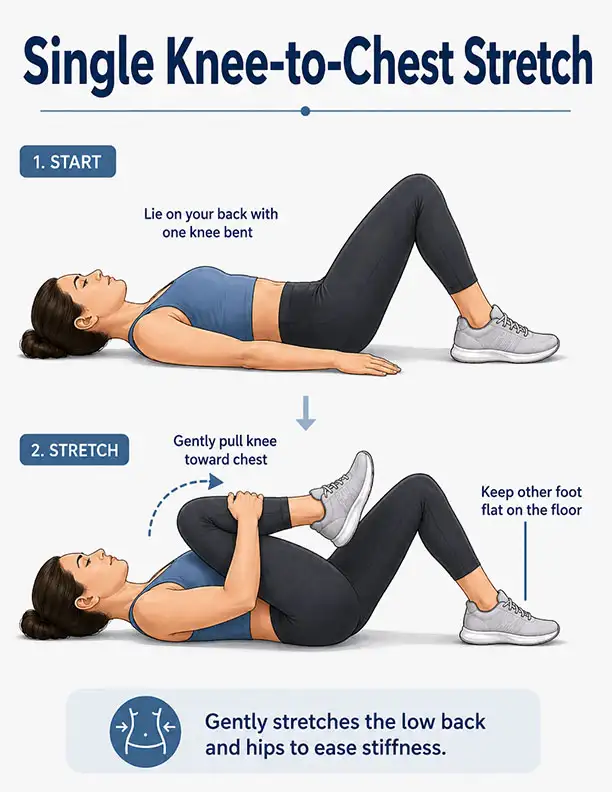
Single Knee-to-Chest Stretch
How to do it: Lie on your back with both knees bent. Slowly bring one knee toward your chest while the other foot stays on the floor. Hold behind the thigh or over the shin, whichever is more comfortable. Hold for 20 to 30 seconds, then lower the leg slowly. Repeat two to three times on each side.
What it does for you: This stretch gently opens the low back, gluteal muscles, and back of the hip. It may reduce stiffness around the lumbar spine and pelvis.
Why it may help: Tightness in the low back and hips can increase strain during walking, sitting, and bending. The single knee hug is a gentle back pain exercise, as gradual movement and stretching within a tolerable range is recommended.
-
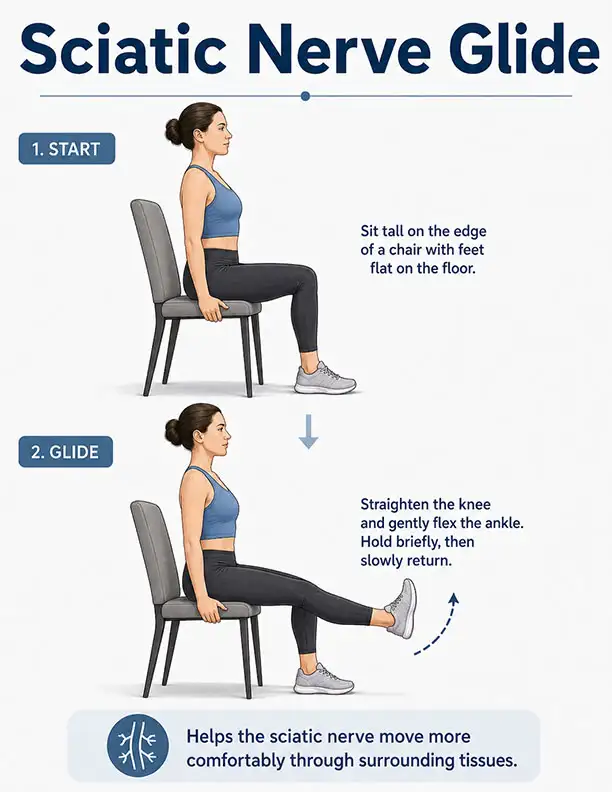
Sciatic Nerve Glide
How to do it: Sit tall on the edge of a chair with both feet on the floor. Slowly straighten one knee until you feel a mild stretch down the back of the leg. At the same time, point your toes away from you. Then bend the knee back down as you relax the foot. Repeat 8 to 10 times on one side, then switch.
For a slightly different version, straighten the knee and gently flex the ankle toward you, then relax. Keep the motion slow and easy. This should feel like a light flossing motion, not an intense hamstring stretch.
What it does for you: A nerve glide gently moves the sciatic nerve through surrounding tissues. It’s not meant to stretch the nerve hard. It’s meant to encourage comfortable mobility.
Why it may help: Sciatica symptoms can involve nerve sensitivity. Gentle nerve gliding may help the nervous system tolerate motion better, especially when paired with the right strengthening and posture strategies from your Thrive physical therapist.
-
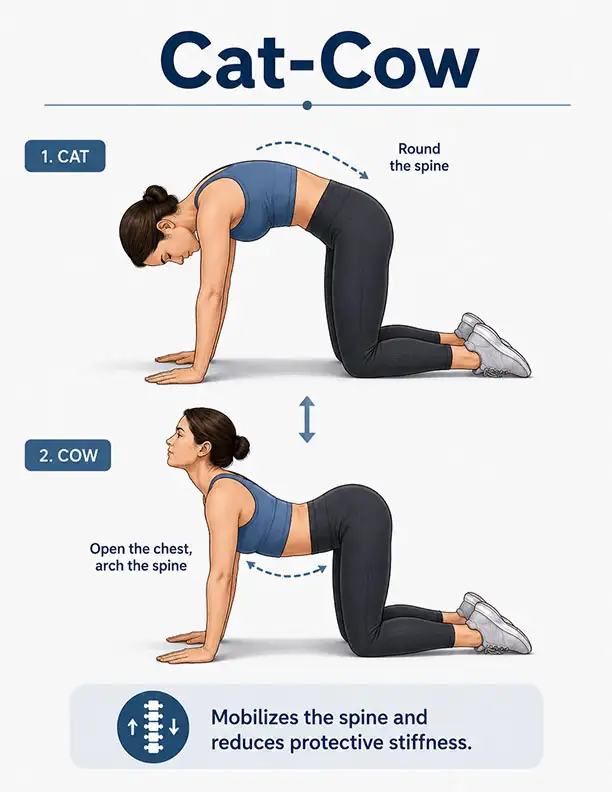
Cat-Cow
How to do it: Start on your hands and knees with your hands under your shoulders and knees under your hips. Slowly round your back upward, tucking your chin slightly. Then reverse the motion by letting your belly soften toward the floor as you lift your chest and gaze gently forward. Move slowly through 8 to 10 repetitions.
What it does for you: Cat-cow moves the spine through flexion and extension in a gentle, rhythmic way. It also encourages breathing and reduces protective stiffness.
Why it may help: Stubborn back pain can make the spine feel locked up. Cat-cow helps restore motion without loading the spine heavily.
-
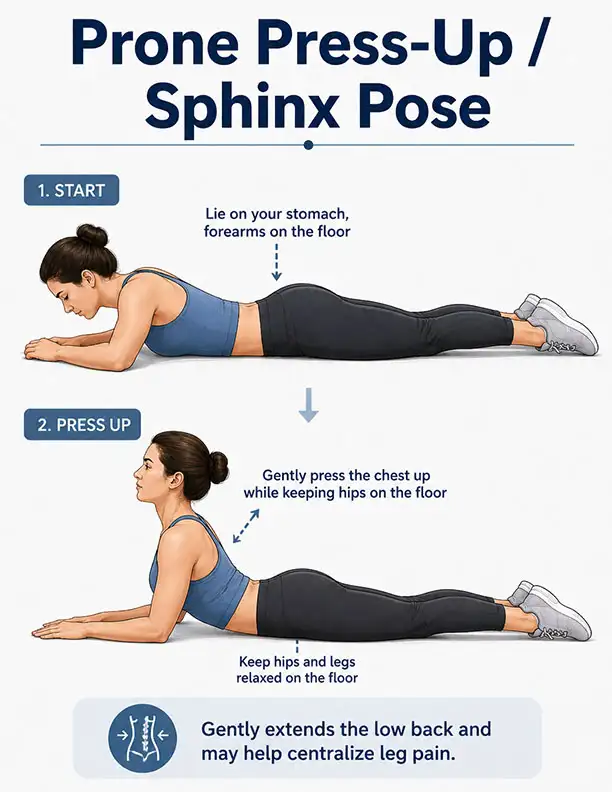
Prone Press-Up or Sphinx Pose
How to do it: Lie on your stomach. For the gentlest version, prop yourself on your forearms with your elbows under your shoulders, like a sphinx. Breathe slowly and hold for 10 to 20 seconds. If that feels good, place your hands under your shoulders and gently press your chest upward while keeping your hips relaxed on the floor. Lower back down slowly. Repeat five to eight times.
What it does for you: This exercise gently extends the lumbar spine and opens the front of the hips and abdomen.
Why it may help: Some people with sciatica-like pain feel better when they move into extension. A physical therapist may look for whether symptoms “centralize,” meaning leg pain decreases or moves closer to the back. That can help guide exercise selection. If this movement sends pain farther down your leg, stop and ask your Thrive physical therapist for a better option.
-
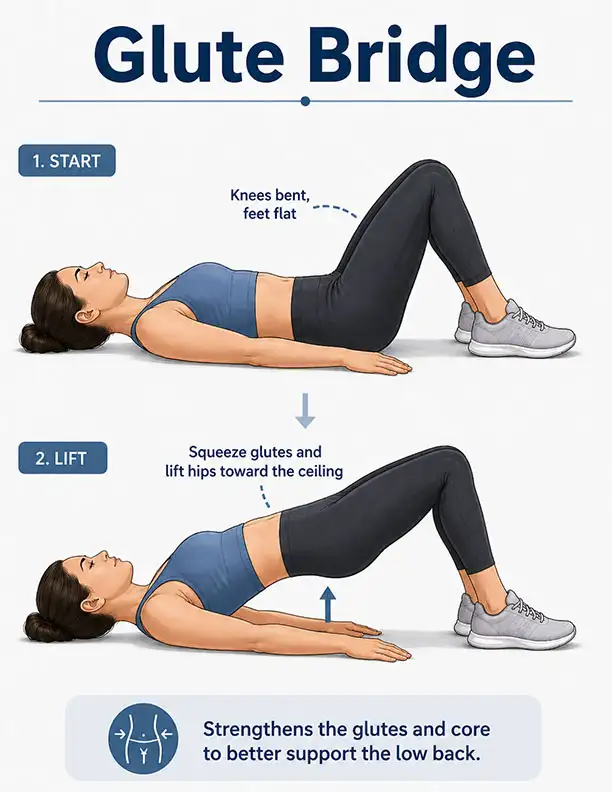
Glute Bridge
How to do it: Lie on your back with knees bent and feet hip-width apart. Gently tighten your lower belly and squeeze your glutes. Lift your hips until your body forms a straight line from shoulders to knees. Pause for one to two seconds, then lower slowly. Start with six to eight repetitions.
What it does for you: Bridges strengthen the glutes, hamstrings, and trunk muscles. These muscles help support the pelvis and reduce excess demand on the low back.
Why it may help: When the glutes are weak or underactive, the low back often works harder than it should. Strengthening the hips can improve walking, stair climbing, lifting, and standing tolerance.
-
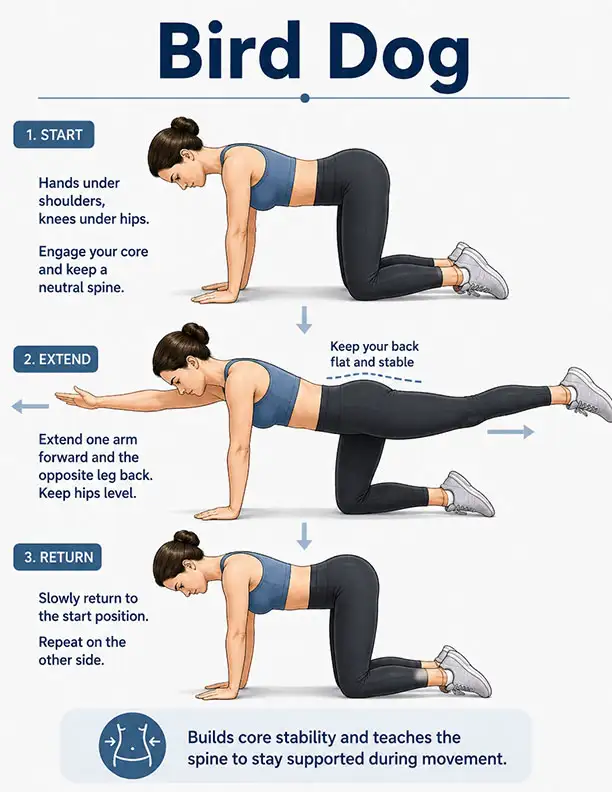
Bird Dog
How to do it: Begin on your hands and knees. Gently brace your core as if preparing for a cough. Extend one leg straight back without letting your hips twist. If that feels stable, reach the opposite arm forward. Hold for two to three seconds, then return to the starting position. Alternate sides for 6 to 10 repetitions.
What it does for you: Bird dog strengthens the core, glutes, spinal stabilizers, and shoulder muscles while training balance and coordination.
Why it may help: Back pain often improves when the spine has better support from surrounding muscles. Bird dog teaches your body to keep the trunk steady while the arms and legs move, which is exactly what daily life requires.
Tips to Support Your Physical Therapy
Start small and stay consistent. Add exercises gradually, beginning with a few repetitions, and doing small number of rounds throughout the day when appropriate.
Use a pain scale. Try to keep exercise discomfort mild to moderate. For example, on a 0 to 10 scale, think of 0 to 3 out of 10 as minimal pain, 4 to 5 as acceptable, and 6 to 10 as excessive. If pain climbs too high, reduce the range, slow down, rest longer, or stop.
Avoid long periods of sitting. Sitting can aggravate sciatica for some people. Stand, walk, or change positions every 30 to 45 minutes.
Walk if it feels good. Gentle walking can help circulation and reduce stiffness. Keep your stride comfortable and avoid pushing through symptoms that worsen with each step.
Use heat or ice carefully. Cold packs may help early on, and heat may be helpful after the first few days. Stretching should be gentle, held without bouncing, twisting, or jerking.
Tell your therapist what changes. Your symptoms give important clues. Share whether pain is moving farther down the leg, becoming more centralized, improving after movement, worsening after sitting, or changing with sleep.
How Physical Therapy at Thrive Can Help
Exercises are helpful, but the right plan matters. Physical therapy can identify whether your symptoms are more related to disc irritation, joint stiffness, nerve sensitivity, hip mobility, muscle weakness, posture habits, lifting mechanics, or a combination of factors.
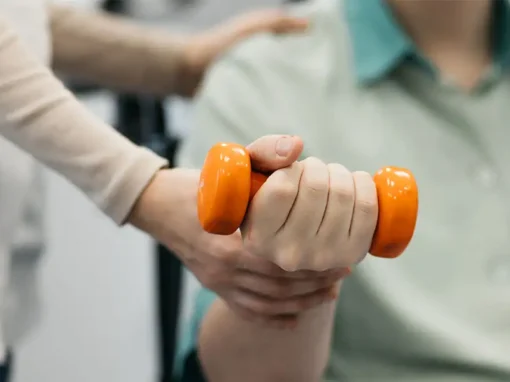
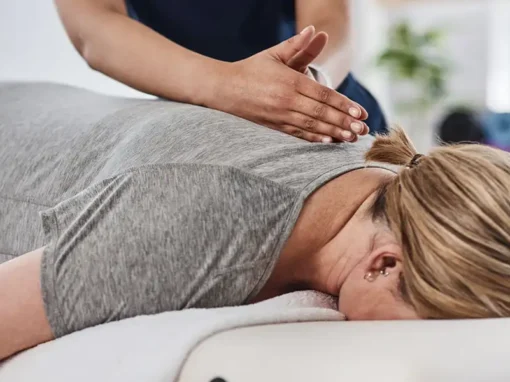
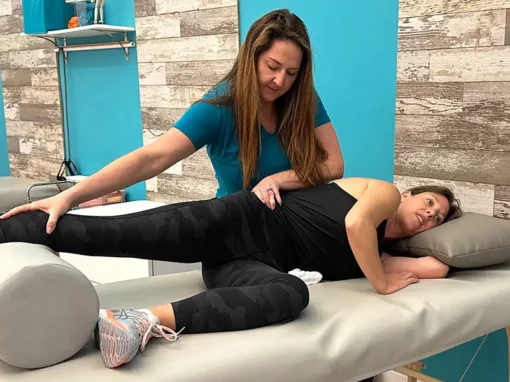
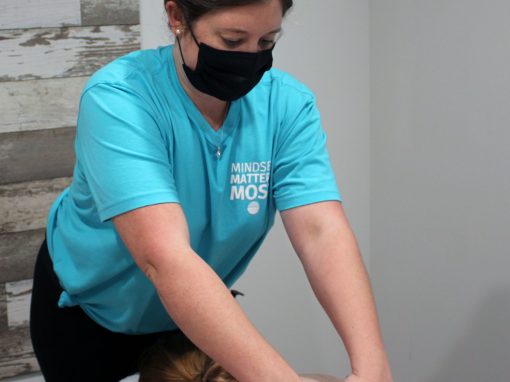
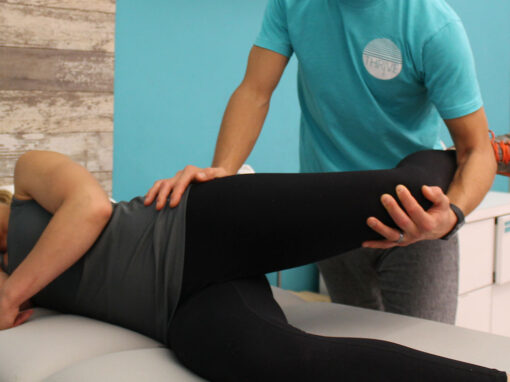
A Thrive physical therapy plan may include hands-on care, guided exercise, mobility work, strengthening, balance training, gait assessment, posture coaching, and education. The American College of Physicians recommends non-drug approaches, including exercise and multidisciplinary rehabilitation, as initial options for chronic low back pain.
Physical therapy is also helpful because it gives you a progression. Early on, you may need calming movements and gentle mobility. Later, you may need strength, endurance, and return-to-activity training. Eventually, the goal is prevention: knowing how to keep your back resilient when life gets busy.
That’s where Thrivestyle Medicine™ fits beautifully. Your care isn’t just about reducing pain today. It’s about helping you build strength, confidence, and habits that support the way you want to live.
Moving Forward With Confidence
Stubborn back pain and sciatica can make your world feel smaller. You may avoid exercise, hesitate before lifting, or worry that one wrong movement will set everything off again. Physical therapy helps replace fear with a plan.
The right exercises can calm irritation, restore mobility, build strength, and help your body trust movement again. More importantly, working with a physical therapist at Thrive gives you personalized guidance, so you are not guessing which exercises are right for your back.
Want to get started? Book your free physical therapy screening at Thrive today. Your spine is designed to move. With thoughtful care, steady practice, and the right support, you can begin moving through daily life with more comfort, confidence, and freedom.