
If you’ve ever caught your reflection in a window and thought, “Wait, is my head really that far forward?” or felt that end-of-day neck and shoulder heaviness that makes you want to “sit up straight,” you are not alone. Posture has become a big topic for a good reason; many of us spend hours at desks, in cars, and on phones, and our bodies adapt to what we do most.
That is exactly why posture correctors are so popular. They promise a quick fix, and on a tough day, that sounds pretty tempting.
Still, posture is more than a look. It is a relationship between your joints, muscles, nervous system, and even your breathing. If you want posture that feels better, not just posture that looks different, you’ll usually do best with an approach that builds awareness and strength, and then makes it easy to repeat in real life.
So let’s talk about what posture correctors are, what they can and cannot do, and how you can improve your posture without relying on one.
What Is a Posture Corrector?
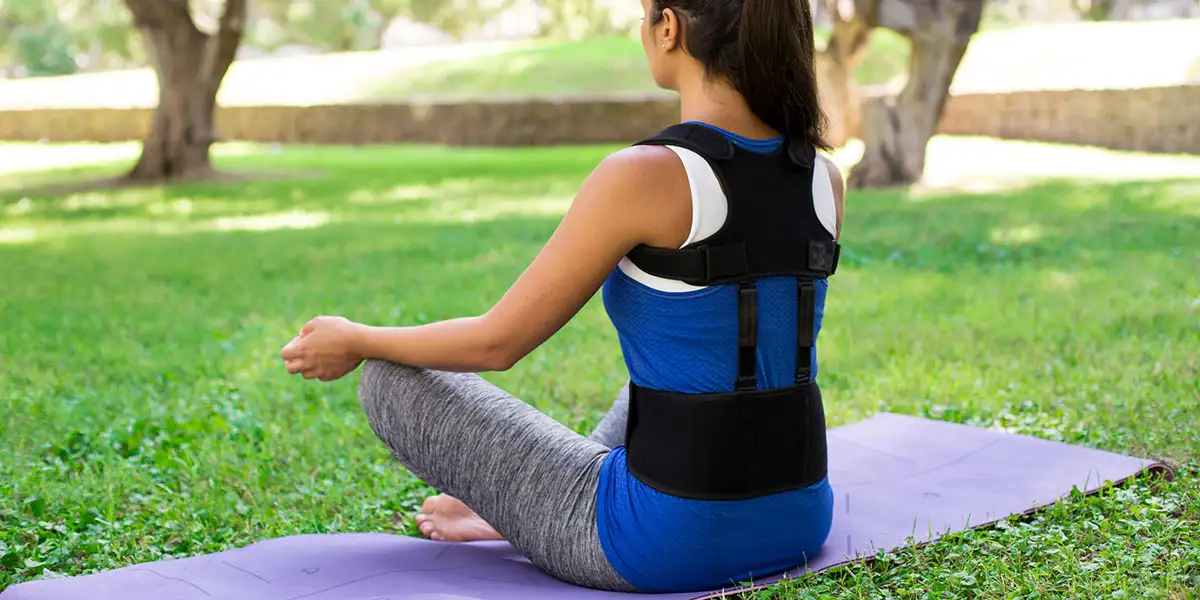
A posture corrector is any wearable device designed to “cue” your body toward a more upright position. Most fall into a few categories:
- Shoulder retraction braces (often figure-eight straps) that pull the shoulders back
- Thoracic support braces that wrap around the upper back and torso
- Posture shirts with built-in tension panels
- Biofeedback wearables that buzz or alert you when you slouch
They are marketed for forward head posture, rounded shoulders, upper back tightness, and sometimes for pain relief.
In plain language, a posture corrector is usually doing one of two things:
- Holding you in a new position, or
- Reminding you to find a new position
Those are not the same thing, and that difference matters.
Do Posture Correctors Work?
The honest answer is, “Sometimes, for some people, in some situations.”
There is research suggesting that certain orthotic devices can improve posture-related measurements in specific populations, such as forward head posture, at least in the short term. There is also research on wearable and bracing devices showing changes in postural stability, depending on the device and the condition studied.
At the same time, many consumer posture correctors have mixed evidence and may offer benefits that are limited or temporary, especially if the device becomes the main strategy instead of a cue that supports real change.
A helpful physical therapist perspective is that a corrector can act as a guide or muscle reminder, especially when you are trying to break a habit of staying in one position for long periods.
So yes, a posture corrector can be useful, but it’s usually best thought of as a training wheel, not the bike.
The Pros of Posture Correctors
If you’ve been considering one, here are the potential upsides, when used thoughtfully:
They Can Increase Awareness
Many people do not realize how often they slump until something provides immediate feedback. That awareness is a powerful first step.
They Can Offer Short-term Symptom Relief
For some people, especially those with fatigue-related slumping later in the day, a corrector can reduce strain temporarily.
They Can Help You “Find” a Posture You Have Forgotten
If you’ve been living in rounded shoulders for years, the sensation of a more open chest and stacked ribcage can feel surprisingly unfamiliar.
The Cons, and Why Posture Correctors are Not a Long-Term Solution For Most People
This is where a caring reality check can save you time, money, and frustration.
They Don’t Build the Strength and Coordination You Need
If a device holds you in place, your body does not have to learn how to support that position. When the brace comes off, your system often goes right back to the default.
They Can Create Dependence
Some people start feeling like they “cannot sit right” without the device. That is the opposite of what we want. We want your posture to be a skill you own.
They Can Shift the Problem Elsewhere
Pulling your shoulders back without supporting the ribs, neck, and pelvis can lead to a forced posture that increases tension. Some people end up with more neck tightness or rib flare.
“Good Posture” is Not One Perfect Position
One of the biggest posture myths is that there is a single correct posture you should hold all day. In real life, the best posture is often the one you can move in and out of comfortably. Even Harvard Health emphasizes posture as a contributor to back health, and also highlights the importance of movement and strengthening, not just “holding yourself straight.”
Breathing Can Get Worse if You Brace Too Rigidly
Some posture devices make people feel locked into the upper chest. When the ribs cannot move well, people often shift into neck and shoulder breathing, which can add to tension over time.
A Friendlier Way to Think About Posture
Instead of chasing “perfect posture,” try this mindset:
Posture is how your body organizes itself for the task you are doing.
Your posture changes when you:
- type
- drive
- pick up a child
- cook
- walk
- train at the gym
- relax on a couch
Your goal is not to be stiffly upright all day. Your goal is to have:
- enough mobility to move easily
- enough strength and endurance to support your activities
- enough breathing capacity to keep your ribcage and core doing their job
- enough awareness to adjust before pain builds
That is the kind of posture that feels good.
How to Improve Your Posture Without a Posture Corrector
Here’s the encouraging part: Most people can improve posture with a few consistent habits, and the changes often feel better within weeks.
-
Start With the Most Effective Posture Strategy of All: Change Positions Often
MedlinePlus, a trusted health information source, literally leads with guidance like switching positions often and taking brief walks.
Try this simple rule:
- Every 30 to 45 minutes, change something.
Stand up, take 10 slow breaths, walk to refill water, or do a quick mobility reset.
Your body loves variety.
-
Build “Stacking” Instead of “Holding”
Many people try to fix posture by yanking shoulders back. That usually creates tension.
A softer cue that works better is:
- Ribs over pelvis
- Head floating over ribs
- Shoulders relaxed, not pinned back
Think “tall and easy,” not “military.”
-
Improve Your Workspace So Your Posture Isn’t Fighting Your Environment
You should not have to win a battle against your desk for eight hours a day.
A few high-impact adjustments:
- Bring your screen closer and closer to eye level
- Support your low back, and let your ribcage rest over it
- Keep elbows near your sides, and wrists neutral
- Place your feet on the floor, or use a footrest if needed
If you work on a laptop, a separate keyboard and a stand can be a game changer.
-
Train Your Upper Back and Shoulder Blade Muscles for Endurance
Rounded shoulders are often less about weakness in a “max strength” sense, and more about endurance. Those muscles get tired, and your body chooses the path of least effort.
Two simple, friendly starters:
- Wall angel reach: gentle shoulder blade upward rotation and rib control
- Band pull-aparts: slow, controlled, stop before you feel neck tension
The goal is a steady burn in the mid-back, not a shrug in the neck.
-
Open What Is Stiff, Strengthen What Is Sleepy
Posture is often a combination of:
- Tight areas that do not want to move
- Underactive areas that do not want to hold you up
Common patterns:
- Tight chest and front-of-shoulder tissues
- Stiff upper back
- Underactive mid-back and deep neck stabilizers
- Ribs flared up with shallow breathing
A doorway chest stretch and gentle thoracic mobility work can be great, as long as you do not crank into discomfort.
-
Fix “Tech Neck” With a Kinder Approach
If you have searched “tech neck,” you have already noticed how much phone and laptop posture matters.
Try this:
- Raise your phone toward your face instead of dropping your head toward your phone
- When you catch yourself forward, do one slow chin nod, not a hard neck pullback
- Then exhale and let your ribs soften down, and let your shoulders drop
Small changes done often beat one intense stretch done once.
-
The Missing Piece For Most People: Breathing
This is where posture changes fast, because breathing influences your ribcage position, your core pressure system, and your nervous system tone.
Your diaphragm is not only a breathing muscle. It also plays a role in postural control and stability. More recent work continues to explore links between breathing patterns, postural stability, and even psychological factors.
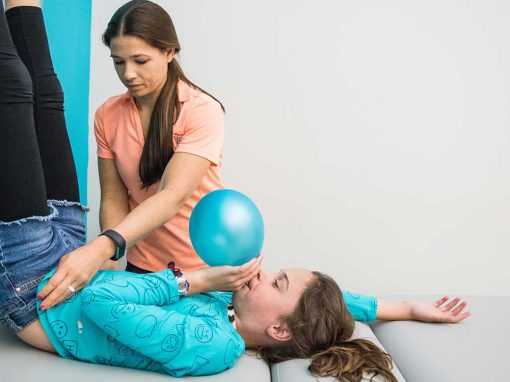
A gentle starting practice:
- Lie on your back with knees bent, feet flat.
- Place one hand on your lower ribs.
- Inhale through your nose, and feel the ribs expand quietly.
- Exhale slowly like you are fogging a mirror, and feel the ribs soften down.
- Pause for a second, then repeat for five to eight breaths.
If you feel your neck and shoulders doing all the work, that is a helpful clue, not a failure. It simply means your system is ready for coaching.
A Simple “Posture Plan” You Can Start This Week
If you want a practical approach that does not feel overwhelming, try this:
Daily, five to eight minutes total:
- Two posture resets during your day
- Stand up, exhale fully, relax shoulders, gently stack ribs over pelvis.
- One mobility move (one minute)
- Gentle upper back rotation or a supported thoracic opener.
- One strengthening move (two minutes)
- Band pull-aparts or a light row variation, slow and controlled.
- Breathing practice (two minutes)
- Supine breathing with a slow exhale and rib softening.
And every 30 to 45 minutes:
- Change positions, even briefly
This is how posture improves in real life. Not with perfection, but with repetition.
Why We Invite You to Start With Breathing and Posture Together
Many posture programs focus only on appearance or “standing tall.” At Thrivestyle Medicine™, we care more about how your posture feels, how you breathe, and how your body handles stress and daily load.
Breathing and posture are deeply connected. If your ribcage is stuck, your neck and shoulders often take over breathing. If breathing is shallow and fast, your nervous system can stay in a more “on edge” state, and your body may default to tension patterns that show up as tight traps, forward head posture, or a stiff low back.
When we improve breathing mechanics and postural organization together, people often notice:
- Less neck and shoulder tightness
- Easier upright sitting without forcing it
- Better tolerance for desk work
- Improved body awareness, and fewer flare-ups
Ready For Real Guidance, Without Guessing?
If you’re tired of posture hacks that do not stick, and you want a plan that fits your body, we would love to help.
Schedule a Free Breathing Therapy & Postural Restoration® Screening with us at Thrive. We’ll look at how you breathe, how you stack your ribcage and pelvis, how you move through the positions you live in most, and what simple changes will give you the biggest return. You’ll leave with clarity and a next step that feels doable.
Your posture should not feel like a full-time job. With the right cues, the right breathing, and a plan that matches your life, it can start to feel natural again.