

Health is not something we suddenly arrive at one day. It’s something we choose, practice, revisit, and rebuild through every season of life.
At Thrive Proactive Health, we see health through the lens of Thrivestyle Medicine™, which means caring for the whole person, not just addressing symptoms as they appear. Your body, mind, emotions, relationships, environment, routines, and sense of purpose are all connected. When one area is neglected, the others often feel it. When one area is supported, the benefits can ripple outward in powerful ways.
Putting health first doesn’t mean living perfectly. It doesn’t mean having endless time, flawless habits, or a rigid plan that never bends. It means learning how to make daily choices that help you feel more grounded, energized, resilient, and aligned with the life you want to live.
Why Life Transitions Matter
This matters deeply during life transitions.
A transition might be exciting, difficult, unexpected, or long overdue. It may look like a career change, a new school, a new relationship, a move, becoming a parent, entering midlife, navigating an empty nest, recovering from illness, caring for aging parents, grieving a loss, or simply realizing that the routines that once worked no longer fit who you are becoming.
Transitions can disrupt our rhythm, but they also create an opening. They invite us to ask, “What do I need now?” and “What kind of life am I building from here?”
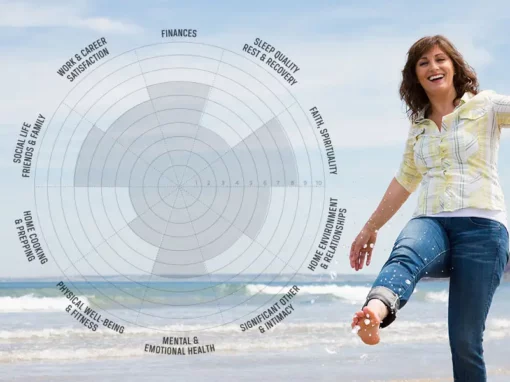
From the Thrivestyle Medicine™ perspective, thriving through change begins with small, intentional choices across six key pillars:
- Mindset & Emotional Elevation
- Sleep, Rest, & Recovery
- Stress Resilience
- Relationships & Connection
- Physical Vitality & Movement
- Nutrition as Fuel
These pillars are not separate boxes to check. They are living, breathing parts of your daily experience. When we honor them, we begin to build a lifestyle that supports not only longevity, but vitality, clarity, and joy.
1. Mindset & Emotional Elevation: Begin With the Inner Conversation
The way we speak to ourselves shapes the way we move through the world.
During transitions, it’s common for the inner critic to become louder. You may question whether you’re doing enough, healing quickly enough, adapting well enough, or making the right decisions. The mind wants certainty, but transitions often ask us to live in the unknown.
This is where mindset becomes a daily health practice.
Mindset isn’t about pretending everything is fine. It’s about creating an inner environment that supports growth, compassion, and emotional honesty. Emotional elevation doesn’t mean forcing positivity. It means learning to notice what you feel, name it, and gently guide yourself toward thoughts and choices that restore your power.
A simple daily practice can make a meaningful difference. Before reaching for your phone in the morning, pause and ask yourself: “How do I want to show up today?” Maybe the answer is calm. Or it’s patient. Maybe it’s brave, focused, forgiving, or open. This small moment sets a tone. It reminds you that you are not merely reacting to life. You are participating in it.
Journaling, prayer, meditation, breathwork, gratitude, affirmations, and quiet reflection can all support emotional elevation. So can laughter, creativity, music, sunlight, and allowing yourself to feel what is real without judgment.
Thriving begins when you stop treating your emotional life as an inconvenience and start honoring it as vital information.
2. Sleep, Rest, & Recovery: Healing Happens in the Pause
Our culture often celebrates productivity while undervaluing rest. We push through fatigue, override signals from the body, and treat exhaustion as a badge of honor. Yet true health requires recovery.
Sleep is one of the most powerful foundations of well-being. It affects mood, focus, appetite, immune function, hormones, metabolism, and the body’s ability to repair. Rest also includes more than sleep. It includes moments of stillness, spaciousness, play, reflection, and nervous system calm.
During life transitions, sleep and rest are often the first things disrupted. Stress may keep the mind racing at night. New responsibilities may change your schedule. Emotional processing may leave you feeling tired in ways that are hard to explain.
Putting health first means giving yourself permission to recover. A supportive evening routine can become a signal of safety to the body. That may mean that you:
- Dim the lights.
- Step away from screens earlier.
- Stretch gently.
- Sip something calming.
- Write down tomorrow’s tasks so your mind does not have to hold them overnight.
- Keep your bedroom cool, dark, and peaceful when possible.
Rest is not laziness. Rest is maintenance. Repair. It’s how your body integrates the demands of the day and prepares you for what comes next.
If your season of life does not allow for perfect sleep, aim for pockets of recovery. A few deep breaths between meetings. Ten minutes outside. A quiet cup of tea. Perhaps a brief nap. A slower walk. These pauses count.
The body listens when you give it room to exhale.
3. Stress Resilience: Learning to Bend Without Breaking
Sure, it’s a part of life, but living in a constant state of stress is not meant to be our default.
Stress resilience is the ability to meet life’s demands without losing connection to yourself. It’s not about eliminating all pressure. It’s about building capacity, so your nervous system can return to balance more easily.
From the Thrivestyle Medicine™ perspective, resilience is cultivated through daily rhythm. Your body feels safer when there are predictable cues of care throughout the day. This may include regular meals, movement, hydration, breathing practices, supportive relationships, and moments of quiet.
Breathing is one of the quickest ways to communicate safety to the body. Try pausing a few times a day to inhale slowly, then exhale a little longer than you inhale. This can be especially helpful before difficult conversations, transitions between work and home, or moments when you feel overwhelmed.
Stress resilience also grows when we reconnect with perspective. Not every problem has to be solved immediately. Not every emotion requires urgent action. And not every hard day means you’re failing.
You can be in progress and still be okay.
4. Relationships & Connection: Health Is Not Meant to Be Lived Alone
Human beings are wired for connection. Our relationships can nourish us, challenge us, comfort us, and remind us who we are when life feels uncertain.
During transitions, connection becomes especially important. Change can feel isolating, even when the change is positive. You may feel like others don’t fully understand what you’re experiencing. You may be tempted to withdraw, put on a brave face, or avoid asking for support.
Yet meaningful connection is a pillar of thriving.
Putting health first may mean reaching out before you feel ready. It may mean calling a friend, joining a group, seeing a counselor, scheduling time with someone who makes you feel like yourself, or being honest with a loved one about what you need.
Healthy relationships also require boundaries. Connection doesn’t mean overextending yourself or saying yes when your body and spirit are asking for space. Sometimes the most loving choice is clarity. Sometimes it’s rest. And sometimes it’s choosing people who honor your growth rather than pull you back into old patterns.
We thrive more fully when we feel supported, seen, and connected to something beyond ourselves.
5. Physical Vitality & Movement: Move in Ways That Restore Life
Movement is not punishment for what you ate. It’s not only about appearance, and it doesn’t have to be extreme to be meaningful.
Movement is a way of communicating with your body. It supports circulation, strength, mobility, mood, energy, balance, and confidence. It can also reconnect you with a sense of agency during times when life feels unpredictable.
The key is to choose movement that fits your current season. There may be times for vigorous training, and there may be times for gentle walks, stretching, physical therapy, yoga, or simply standing up more often throughout the day. The goal is not to force your body into someone else’s definition of fitness. The goal is to build physical vitality in a way that supports your whole life.
Ask yourself: “What kind of movement would help me feel better today?”
Maybe your body needs strength. Mobility. Fresh air. Maybe it needs music and dancing in the kitchen. Or a slow walk while you process your thoughts.
During transitions, movement can become an anchor. A morning walk can create stability. Strength training can remind you that you are capable. Stretching can help release tension stored in the body. Even five minutes can shift your state.
Consistency matters more than intensity. When movement becomes a form of self-respect rather than self-criticism, it becomes something you can return to again and again.
6. Nutrition as Fuel: Eating to Support the Life You Want
Food is more than calories. It’s information, nourishment, culture, comfort, energy, and connection.
From a Thrivestyle Medicine™ perspective, nutrition isn’t about perfection or restriction. It’s about fueling your body in a way that supports stable energy, clear thinking, healthy digestion, balanced mood, and long-term vitality.
During life transitions, eating patterns can change quickly. Stress may lead to skipped meals, cravings, emotional eating, or relying on convenience foods. Rather than judging yourself, begin with awareness. Your body is trying to adapt.
One helpful approach is to focus on what you can add before focusing on what to remove.
- Protein to support satiety and strength
- Colorful plants for fiber and nutrients
- Water
- Healthy fats
- Meals that feel grounding and satisfying
A nourishing plate doesn’t have to be complicated. It might include a quality protein, vegetables or fruit, a fiber-rich carbohydrate, and a healthy fat. It might be a soup, salad, bowl, smoothie, or simple home-cooked meal. The best nutrition plan is one you can realistically return to.
Food choices also affect transitions because they shape daily energy. When you fuel yourself well, you are better equipped to make decisions, regulate emotions, move your body, and engage with others.
Eating well isn’t about controlling your body. It’s about caring for the person living inside it.
Creating New Routines That Support Who You Are Becoming
Routines are powerful because they reduce decision fatigue. They help healthy choices become less dependent on motivation and more connected to rhythm.
When entering a new season, it can be tempting to overhaul everything at once. Yet lasting change is usually built through small, repeatable actions.
Choose one daily anchor to begin. It might be a glass of water before coffee. A five-minute morning mindset practice. Maybe a consistent bedtime cue. A walk after lunch. A protein-rich breakfast. Your Sunday meal-planning ritual. It might be a weekly phone call with someone you love. Or a brief breathing practice before you start the car.
Small choices become powerful when they are repeated with intention.
As your routine grows, think of it as a living support system rather than a strict set of rules. Life will interrupt it. Travel, illness, family needs, work demands, and emotional seasons may require flexibility. That doesn’t mean you have failed. It means your routine needs room to breathe.
Thriving isn’t rigid. Thriving is responsive.
The Daily Choice to Put Health First
Putting health first isn’t selfish. It’s foundational.
When you care for your body, mind, and spirit, you show up differently. You have more capacity for your family, your work, your purpose, and your joy. You become more present, more resilient, and more connected to the life you are creating.
Health is shaped by the daily choices that often seem small in the moment: going to bed a little earlier, pausing before reacting, choosing a nourishing meal, taking the walk, asking for help, drinking the water, setting the boundary, breathing deeply, speaking kindly to yourself, and beginning again.
These choices matter.
At Thrive, our Thrivestyle Medicine™ approach honors the whole person through every stage of life. We believe thriving isn’t reserved for perfect circumstances. It’s possible in transition. While you’re healing. When you’re in the middle of uncertainty. It’s possible one choice, one routine, one breath, and one day at a time.
Your health is not a side project. It’s the foundation for how you live, love, work, grow, and become.
And every day offers a new invitation to put it first.