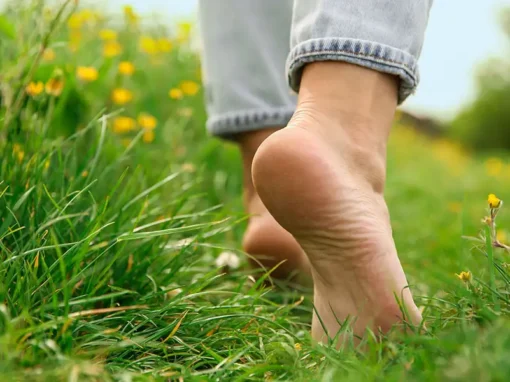


We don’t often give much thought to our legs or feet until something goes wrong. Then suddenly, they have our full attention. Every step feels different. Walking becomes guarded. Standing for too long becomes draining. Even simple daily routines, like getting out of bed, climbing stairs, or going for a walk, can turn into a source of frustration.
Anyone living with chronic leg pain, a lower limb injury, plantar discomfort, ankle instability, or persistent arch pain knows how relentless it can feel. The pain isn’t just physical. It can affect your mood, your energy, your mobility, and your confidence in your own body. When every step is a reminder, it’s easy to feel worn down.
This is where acupuncture can offer a meaningful path forward.
At Thrive, we look at leg and foot pain through a thoughtful, whole-person lens. Acupuncture isn’t simply about chasing symptoms. It’s about understanding why the pain is present, what patterns are contributing to it, and how to support the body’s natural capacity to heal. For many people, that creates a sense of relief that goes beyond pain reduction alone. It can mean moving more comfortably, recovering more fully, and reconnecting with daily life in a way that feels steady again.
Why Leg and Foot Pain Can Be So Disruptive
The lower limbs carry us through almost every part of the day. They absorb impact, stabilize our posture, and help us move through the world with ease. Because they are so essential, pain in the legs or feet tends to affect far more than the area itself.
You may notice pain with:
- Walking or running
- Standing for long periods
- Exercising
- Getting up after rest
- Wearing certain shoes
- Balancing or shifting weight
Common concerns may include plantar fasciitis, calf tightness, shin discomfort, ankle pain, knee-to-foot referral patterns, swelling, post-injury pain, and weakness or instability in the arches. Even when the pain starts in one small area, the body often compensates. That can create secondary tension in the ankles, knees, hips, or low back.
In other words, a foot problem rarely stays “just a foot problem” for long.
How Traditional Chinese Medicine Understands Pain
Traditional Chinese Medicine, or TCM, views pain as a blockage in the circulation of Qi and Blood. Qi can be thought of as the body’s vital energy, while Blood, in TCM theory, refers not only to blood itself, but also to nourishment and proper tissue support. When Qi and Blood move smoothly, the body functions more harmoniously. When that movement is obstructed, pain develops.
From this perspective, leg and foot pain isn’t random. It reflects a pattern of stagnation, deficiency, or accumulation that needs to be identified and addressed.
For the lower limb in particular, TCM often considers the role of “dampness.” Dampness can present as swelling, heaviness, edema, or a lingering sense of congestion in the tissues. Because gravity naturally pulls fluids downward, the legs and feet are especially prone to this pattern. In these cases, acupuncture points may be selected not only to ease pain, but also to promote healthier fluid movement and circulation throughout the body.
In cases involving bone injury or deeper structural recovery, TCM may also focus on supporting Kidney energy. In Chinese medicine, the Kidneys are said to govern the bones and nourish the “Marrow.” When this system is supported, it may help the body rebuild and recover more effectively. In some cases, Chinese herbal medicine may also be considered as part of a broader strategy to support tissue healing.
How Acupuncture Works for Leg and Foot Pain
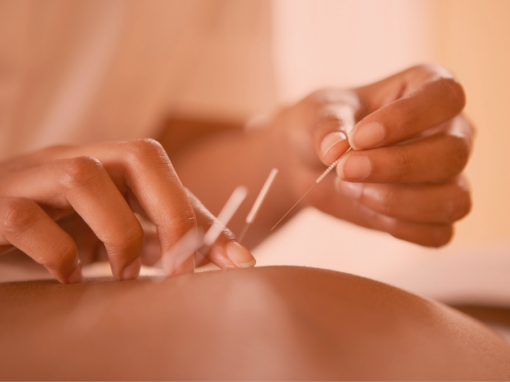
Acupuncture involves the careful insertion of very fine, sterile needles into specific points on the body. These points are chosen based on the meridians involved, the location of pain, the nature of the injury, and the overall pattern our Thrive acupuncture therapist identifies during your assessment.
The goal is not simply to place needles where it hurts. A trained acupuncturist looks at the full picture.
For example, treatment may aim to:
- Move blocked Qi and Blood
- Reduce pain and inflammation
- Improve circulation to injured tissues
- Ease muscle tension and guarding
- Address swelling or fluid stagnation
- Support tendon, fascia, ligament, or bone recovery
- Improve overall balance within the body
Acupuncture often includes local points near the painful area, as well as distal points elsewhere on the body that correspond to the affected meridians and help restore a more balanced pattern.
This is one of the reasons acupuncture can feel both precise and holistic at the same time. The painful foot matters, certainly, but so does the larger system that is either helping or hindering recovery.
What the Process Looks Like at Thrive
Each case is unique, which is why a proper intake matters. Before treatment begins, your therapist will take a detailed medical history and perform a differential diagnosis. That allows for a treatment strategy that is tailored, rather than generic.
This whole-body review is especially important because some cases involve more than a simple mechanical issue. For example, plantar fasciitis may involve micro-tearing of the fascia, but there can also be contributing hormonal or systemic imbalances that affect healing and tissue resilience. The skilled acupuncturists at Thrive will look for those patterns rather than assuming every case is identical.
Once the treatment plan is established, acupuncture needles are placed with care along the relevant channels and points. Many people are surprised by how gentle the experience is. You may feel a brief sensation during insertion, followed by heaviness, tingling, warmth, or a subtle ache. These sensations are often temporary and are commonly associated with the therapeutic response.
After the needles are in place, you rest for a period while the treatment works. Many patients find this deeply calming. For some, that state of relaxation becomes an important part of recovery in itself, especially when pain has kept the nervous system on high alert.
The Advantages of Acupuncture for Lower Limb Pain
One of the reasons people seek acupuncture for leg and foot pain is that it offers a different kind of support than simply masking symptoms. Some of the key advantages include:
It addresses both the pain and the pattern behind the pain.
Rather than focusing only on the place that hurts, acupuncture considers why the issue is persisting. Is there stagnation? Swelling? Weak circulation? A deeper deficiency? Compensation elsewhere in the body? This broader view can make treatment more effective.
It’s highly individualized.
No two cases are exactly alike. Even two people with the same diagnosis may receive different treatments if the underlying pattern differs. That individualized care matters, especially when pain has become chronic or complicated.
It can be combined with other supportive therapies.
Acupuncture integrates well with manual therapies, movement practices, and thoughtful lifestyle changes. It does not have to exist in isolation.
It supports healing, not just temporary relief.
Many people appreciate that acupuncture is aimed at helping the body function better. Pain relief is important, of course, but so is improving circulation, reducing tension, and supporting tissue recovery.
It encourages nervous system regulation.
Pain often creates a cycle of guarding, stress, and sensitivity. Acupuncture can help calm that cycle, which may be especially valuable when pain has been present for a long time.
Practical Tips for Supporting Recovery Between Sessions
While acupuncture can be a powerful part of your care plan, what you do between sessions also matters. A few simple habits can help support better results:
Pay attention to footwear.
Choose shoes that provide appropriate support for your specific needs. Worn-out footwear can quietly worsen strain on the feet, arches, and lower legs.
Respect pain signals.
Pushing through severe or persistent pain is rarely the fastest path to healing. Movement is often helpful, but it should be appropriate and strategic.
Notice swelling or heaviness.
If your legs or feet tend to swell, let your practitioner know. That can offer important clues about fluid circulation and the role of dampness in your case.
Follow through with recommendations.
If your acupuncturist suggests stretching, rest, heat, hydration, or supportive therapies between visits, consistency can make a real difference.
Think beyond the painful spot.
Pain in the foot may involve the calf. Pain in the leg may involve the hip, posture, or gait mechanics. Recovery is often more successful when the whole chain is considered.
Be patient with long-standing issues.
Chronic pain patterns often take time to unwind. Improvement can happen in stages, especially when the body has been compensating for a long time.
A More Hopeful Way Forward
When leg and foot pain become chronic, it’s easy to feel discouraged. You may start to wonder whether discomfort is just something you will have to manage indefinitely. The good news is that many people find genuine relief when care becomes more comprehensive and more personalized.
Acupuncture offers a way to address pain that is both grounded in tradition and attentive to the complexity of the individual. It recognizes that pain is rarely just a local inconvenience. It is part of a broader story the body is telling. When that story is listened to carefully, treatment can become more targeted, more supportive, and more effective.
At Thrive, we approach this work with care, clinical thoughtfulness, and respect for the uniqueness of each person who walks through the door. Whether your pain stems from a chronic injury, arch instability, plantar irritation, swelling, or a slower recovery than expected, acupuncture may be an important part of helping you move forward with more comfort and confidence.
You don’t have to keep letting every step remind you of the problem. Schedule your acupuncture session at Thrive today and take the next step toward lasting relief for your legs and feet.