
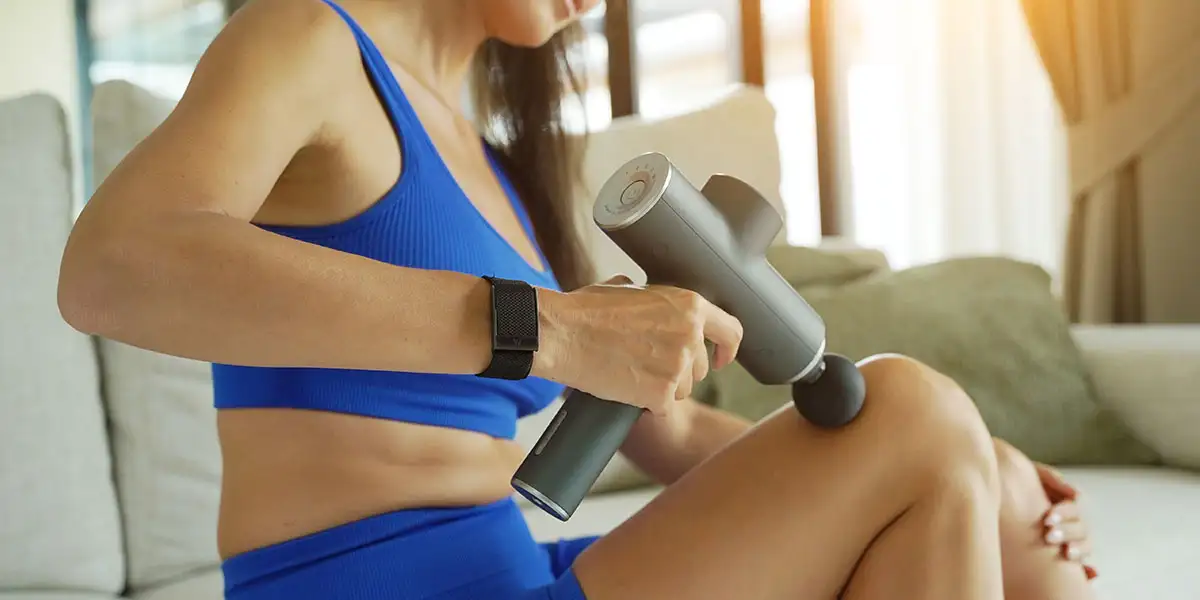
Let’s be honest. At some point, many of us have looked at a sore shoulder, tight glutes, or post-workout calves and thought, “Maybe I just need a massage gun from Amazon and my problems will disappear.”
It’s an understandable thought. Personal massage guns are everywhere now. They’re sleek, satisfying, easy to buy, and wildly tempting after a long workout, a long workday, or a long season of carrying stress in your shoulders. And yes, a massage gun for muscle recovery can be a helpful tool. But only if you know what it can do, what it cannot do, and how to properly use massage guns without accidentally irritating the very thing you are trying to help. Massage guns deliver percussive therapy, meaning rapid pulses and vibration to soft tissue. Research suggests they may help warm tissue, increase local blood flow, improve flexibility, and reduce soreness for some people, but the evidence is still developing and results are mixed.
That’s the key point right there: helpful tool. Not miracle wand. Not substitute for skilled hands. Not a treatment plan all by itself.
So let’s talk about the do’s and don’ts.
First, What a Massage Gun Is Actually Good For
A personal massage gun can be great for quick, targeted work on a tight muscle. Think post-leg-day quads, stiff calves after a run, glutes after a long drive, or upper traps that are cranky from too many hours at a laptop. Used well, a massage gun can be a nice in-between tool for easing tension, preparing for movement, or helping you feel a little less creaky after activity. Research reviews suggest massage guns may improve short-term flexibility and perceived pain, while some newer studies show little effect on certain post-exercise performance measures. In other words, they may help some things, some of the time, but they aren’t magic.
That nuance matters, because social media tends to make these devices look like the answer to everything from sore hamstrings to existential dread. They are not.
The Do’s of Using a Massage Gun
-
Do Start Low and Gentle
This is one of the biggest mistakes people make. They buy a powerful device, turn it up to “jackhammer,” and assume more force equals better results. It usually does not. It’s wise to start with a slower, lighter setting, letting the device do the work, and avoiding extra pressure.
A good rule of thumb is this: If your body is bracing against it, you are probably not relaxing the tissue. You are fighting it.
-
Do Keep it Moving
A massage gun is not something you park on one angry knot for five minutes while hoping for a spiritual breakthrough. Most medical resources recommend starting with a light 10- to 15-second pass, and and not staying in the exact same spot for more than about 10 to 20 seconds. Some recommend keeping total time to about two to three minutes on a muscle group or area.
Translation: Glide, do not drill.
-
Do Stay on Muscle
Massage guns belong on soft tissue, not on bones, joints, or your spine. That means meaty muscle areas tend to make the most sense: calves, quads, hamstrings, glutes, shoulders, upper back, and sometimes the forearms. Multiple clinical and hospital-based sources recommend avoiding bony areas like the spine or kneecap.
If you feel like you are bouncing over bone, you probably are.
-
Do Think of It as a Quick Session, Not an All-Evening Event
Most personal massage-gun sessions should be short. Short enough to help, but not so long that you irritate the tissue. A minute or two per area is usually plenty, and many experts suggest much less if you are staying in one exact spot. More time does not automatically mean more benefit. Sometimes it just means more soreness tomorrow.
-
Do Use It For Recovery, But Keep Expectations Realistic
A massage gun for muscle recovery can absolutely feel good after exercise, especially if your muscles are tight and fatigued. It may also be useful before movement as part of a warm-up if done lightly. But current research does not show that massage guns fix everything, and at least one study found little effect on some physical recovery measures when used immediately after strenuous calf exercise.
So yes, recovery tool. No, not miracle shortcut.
The Don’ts of Using a Massage Gun
-
Don’t Use it on Injured, Numb, Bruised, or Damaged Areas
This is a hard no. Do not use a massage gun over broken skin, bruises, open wounds, recent surgical sites, fractures, or areas with decreased sensation. Mayo Clinic and other health systems all warn against using these devices on areas that are already injured or where you may not feel excessive pressure properly, such as in peripheral neuropathy.
If the tissue is inflamed, damaged, or you cannot feel it normally, a pounding device is not the move.
-
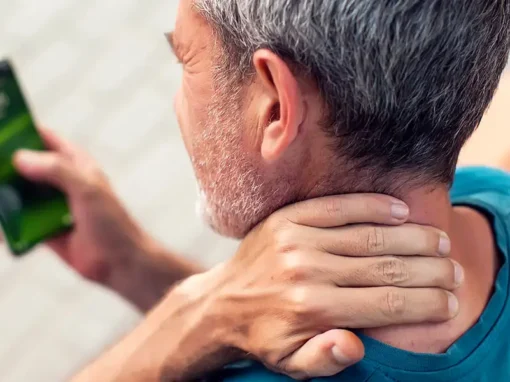
Don’t Use It on the Front or Sides of Your Neck
This one deserves its own headline, because people do this all the time. Massage guns should not be used aggressively, or really casually at all, on the front or sides of the neck. Hinge Health advises avoiding the sides and front of the neck because of the bones, nerves, and arteries there, and other health systems note that aggressive or inappropriate use in the neck could conceivably injure blood vessels. If you’re dealing with neck tension, it’s much safer to stay on surrounding muscles you can clearly identify, or better yet, let a trained professional handle that area.
A stiff neck is annoying. A self-inflicted neck problem is much worse.
-
Don’t Pound Directly on Your Spine, Joints, or Bony Landmarks
Your shoulder blade edge is not a target. Your kneecap is not a target. Your shin is not a target. Your spine is definitely not a target. Massage guns are designed for muscle tissue, and going straight over bony areas is one of the easiest ways to create discomfort instead of relief.
-
Don’t Force It to be Painful
There is a certain personality type that treats wellness like a competition. We love you, but this is your reminder: Pain is not the goal. Extra pressure is not the goal. Bruising is absolutely not the goal. Let the device work at the surface and within the muscle. If you have to grit your teeth to get through it, that’s not “deep tissue.” That’s just too much.
-
Don’t Assume “Cheap and Convenient” Means “Right For Your Body”
A massage gun from Amazon can be fine. Plenty of people buy one and use it happily. But convenience is not the same thing as customization. A device cannot assess whether your tight calf is really a calf issue, or whether it’s part of a larger movement pattern. It cannot tell whether the sore shoulder is from overtraining, stress, poor sleep, desk posture, or compensation from somewhere else. And it cannot sense when a certain area really needs gentler work, different angles, or a completely different approach.
That’s where people get stuck. They keep hammering the symptom, while missing the pattern.
Why Regular Massage Sessions at Thrive Still Matter
Home tools are great, but they work best when they’re part of a bigger plan.
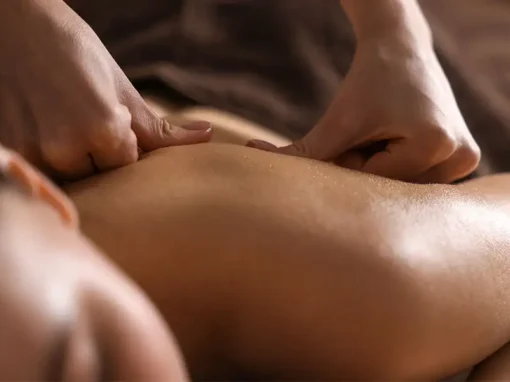
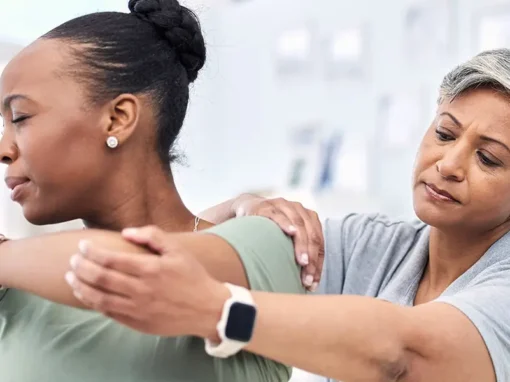
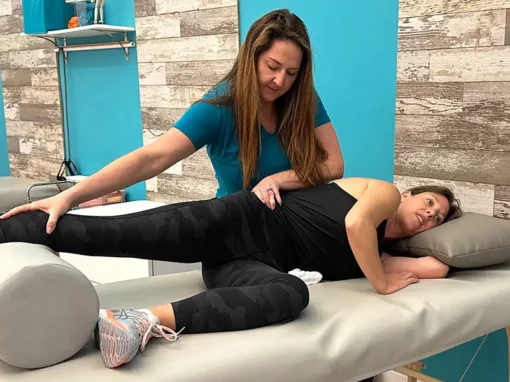
At Thrive, massage isn’t just about rubbing a sore spot and sending you on your way. It’s about paying attention to your body as a whole. It’s about noticing where you hold tension, how your muscles respond, what feels overworked, what feels guarded, and what kind of pressure or technique is actually going to help you.
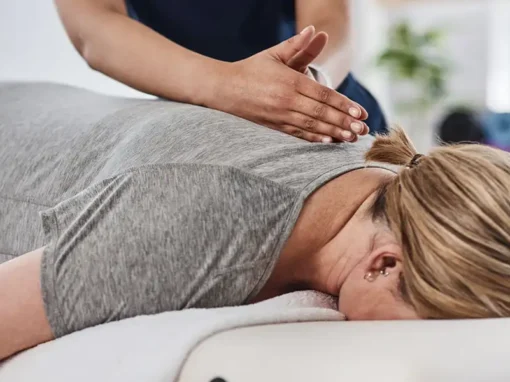
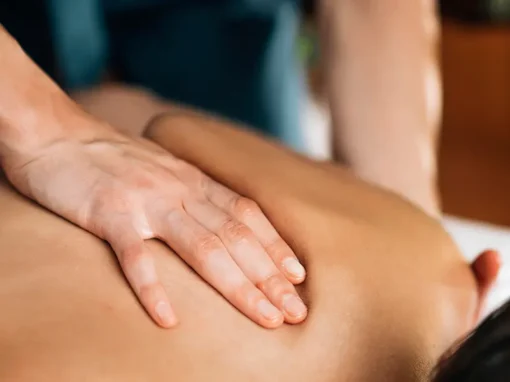
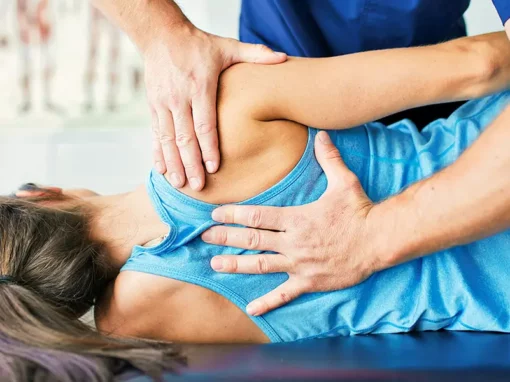
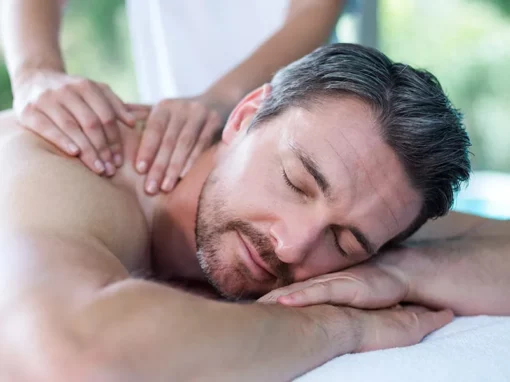
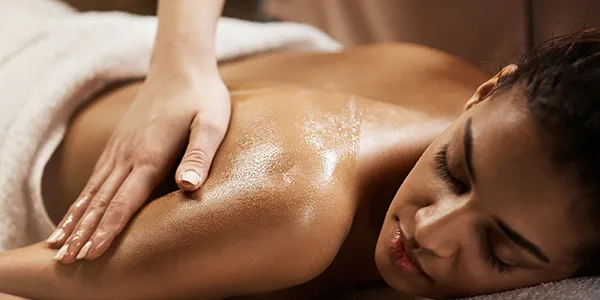
A massage therapist can adjust in real time. They can avoid aggravating structures. They can work into tissue more thoughtfully than a device can. They can help with areas that are awkward to reach on your own. They can support relaxation in a way a handheld machine simply cannot.
That’s one reason regular sessions can be so valuable. They give your body consistent support, not just emergency care when something flares.
The Bottom Line…
Personal massage guns can be useful. They can help with short-term tension, flexibility, and some recovery goals when used correctly. But the do’s and don’ts of personal massage guns really matter. Start light. Stay on muscle. Keep it moving. Avoid bony areas, injured tissue, numb areas, and the front or sides of your neck. And remember that more pressure is not better. Better technique is better.
And if you’re finding yourself reaching for that device every single day, that may be your body’s polite way of saying it wants more than a gadget.
It may be time to let a professional take over. Schedule regular massage sessions at Thrive and give your body the kind of support a handheld device simply cannot provide. Your massage gun can still be part of the plan, but it does not have to do all the heavy lifting.